The biotech industry is a paradox. It produces some of the most sophisticated science in the world, yet the digital marketing strategies of many established biotech companies look they have been untouched in 20 years.
The reason is not negligence. It is that the traditional biotech business model never required it. Researchers find a reagent that works for their assay and order it for the next decade. Lab managers stay with the equipment manufacturer they know because switching protocols is expensive and risky. When customer lifetime value is that high, and the cost of switching is that high, there has never been much pressure to invest in finding new customers through digital channels.
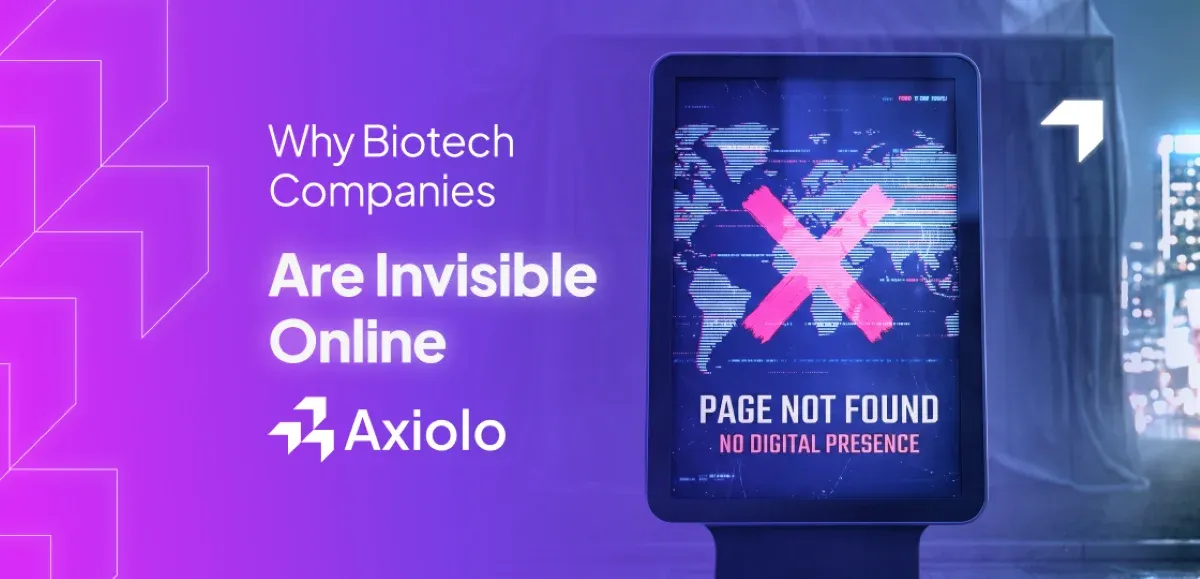
So most biotech companies have not. They rely on sales reps, trade shows, and academic publications. To search engines and to the next generation of buyers coming up behind their current customers, they are effectively invisible.
The Illusion of Safety in a Closed Network
The traditional biotech sales model is built around protecting existing relationships. Sales reps build strong relationships with principal investigators and lab managers. They ensure that the products perform, that the support is responsive, and that the renewal is automatic. For maintaining existing revenue, it works well.
Its vulnerability is its assumptions. It assumes today’s decision makers will remain tomorrow. It assumes new labs and startups will find established brands without active outreach.
That assumption has quietly become unreliable. The pipeline of new buyers entering the market does not know your company’s history. They are starting their search online, and if you are not there, someone else is.
The New Generation of Decision Makers
The researchers and lab managers who are now moving into purchasing roles are digital natives. When they encounter a problem or need a new vendor, their first move is not to wait for their next sales rep visit. It is to search.
They go to Google, science forums, and AI research tools. As Nature has reported, AI-powered tools are transforming how researchers discover and evaluate scientific products and services. If your company isn’t in those results, you don’t exist to them. They will find competitors who are there, including smaller, newer companies designed to be findable, and form relationships before your sales team arrives.
The established brand recognition that protected market share for decades does not automatically transfer to buyers who never experienced its development.
The Impact of AI Search on Biotech Discovery
AI search tools are accelerating the cost of being invisible. Platforms like Google’s AI Overviews and specialized scientific research assistants aggregate information from across the web and surface the most authoritative, clearly structured sources. They favor websites that are technically sound, well-organized, and rich with accurate, specific content.
A website that is outdated, difficult to navigate, or thin on technical detail will not be referenced by these tools. When a researcher asks an AI platform to help them find the best automated liquid handler for high-throughput screening, the companies that surface are those whose websites are built to answer that question exactly.
Being excluded from AI-generated answers is not, in the abstract, a visibility problem. It is a lost sale at the exact moment a buyer was ready to engage.
The Cost of Missing the “Long Tail.”
Biotech researchers search with the specificity that most industries never see. They are looking for exact antibody applications, particular gene sequences, or hardware configurations optimized for a narrow use case. That specificity is an opportunity.
A website with detailed application notes, technical white papers, and comprehensive product pages can attract researchers actively searching for exactly what a company sells, as well as buyers the sales team would never reach through a trade show or a cold call. This traffic is highly qualified, often has a short decision cycle, and represents a market segment that closed-network distribution simply cannot access.
Most established biotech companies are leaving it entirely on the table.
The Credibility Gap for Investors and Partners
The cost of online invisibility extends beyond lost sales. Investors, strategic partners, and potential acquirers all begin their evaluation the same way: they search.
Before a venture firm commits capital or a pharmaceutical company agrees to a partnership conversation, they look up the company. What they find either supports the conversation or creates friction before it starts. A website that looks outdated, communicates vaguely, or fails to reflect the sophistication of the underlying science raises questions that should not need to be raised. We explore this dynamic in detail in the biotech website credibility gap. If the science is this advanced, why does the digital presence look like this?
A strong digital presence does not close a deal on its own. But a weak one can quietly end one before it begins.
Transitioning from Invisible to Indispensable
Fixing online invisibility isn’t adopting consumer marketing. It doesn’t require viral content or broad campaigns. The goal is a digital presence reflecting the science.
It starts with three fundamentals:
- A fast, sound, navigable website.
- Content that answers buyer questions—detailed and structured to be found.
- Technical structure that allows search engines and AI to understand and categorize your offerings.
The mindset shift required is straightforward, even if the execution takes time. A website is not a brochure or a place to host SDS sheets. It is the sales and credibility asset that works when your team is not in the room, reaching buyers you have never met, in markets your reps have not covered, at the moment those buyers are actively looking.
The biotech companies that make that shift now will be better positioned as the generation of digital-native researchers takes over purchasing decisions. Those who wait will find it harder to close the gap.
Frequently Asked Questions
Why is SEO important for biotech if our products are highly specialized? Specialization is precisely why it matters. Researchers use specific, narrow search terms when looking for solutions, a particular antibody conjugate, a reagent for a specific application, or a hardware configuration for a defined workflow. A website optimized for that specificity, with detailed product pages and application notes, captures high-intent traffic that a sales rep would never uncover on their own.
Will investing in our website actually generate leads, or is it just for brand awareness? A well-structured biotech website does both, and it can also serve as a direct lead-generation tool. Offering technical content, white papers, protocols, and detailed case studies in exchange for contact information builds a pipeline of qualified buyers that the sales team can work with. The website serves as the first touchpoint for buyers who were never in the network to begin with.
How does AI search change the way we need to structure our website? AI tools prioritize content that is clearly organized and machine-readable. Schema markup, structured data that tells search engines exactly what your products are, what they do, and how they compare, helps AI platforms surface your content accurately. Technical information buried in unsearchable PDFs is not indexed or recommended. The content needs to be on the page and structured for both human readers and tools that aggregate information on their behalf.
Ready to evaluate your digital footprint?
Don’t let your biotech company go unnoticed by key audiences. Start by running our free SEO audit today to pinpoint the technical and content gaps limiting your reach, and begin connecting with the researchers, investors, and partners who are looking for what you offer right now.