Overview
A website is not just a marketing asset. For a B2B SaaS platform selling to pharma executives at Merck, Bayer, Sanofi, and Johnson & Johnson, it is a credibility signal, often the first one.
Kognitic is an AI-native intelligence platform that structures global clinical trial signals into decision-ready intelligence for commercial and medical strategy teams in life sciences. Their product is world-class. Their client roster is elite. But their website told a different story.
When Axiolo engaged with Kognitic, the gap between the product’s sophistication and its digital presence was impossible to ignore. The old site looked and performed like an early-stage startup. The new one needed to look and perform like the trusted infrastructure partner to some of the world’s largest pharmaceutical companies.
Axiolo led the complete transformation across design, engineering, SEO, and analytics, from first concept to live deployment.
↔
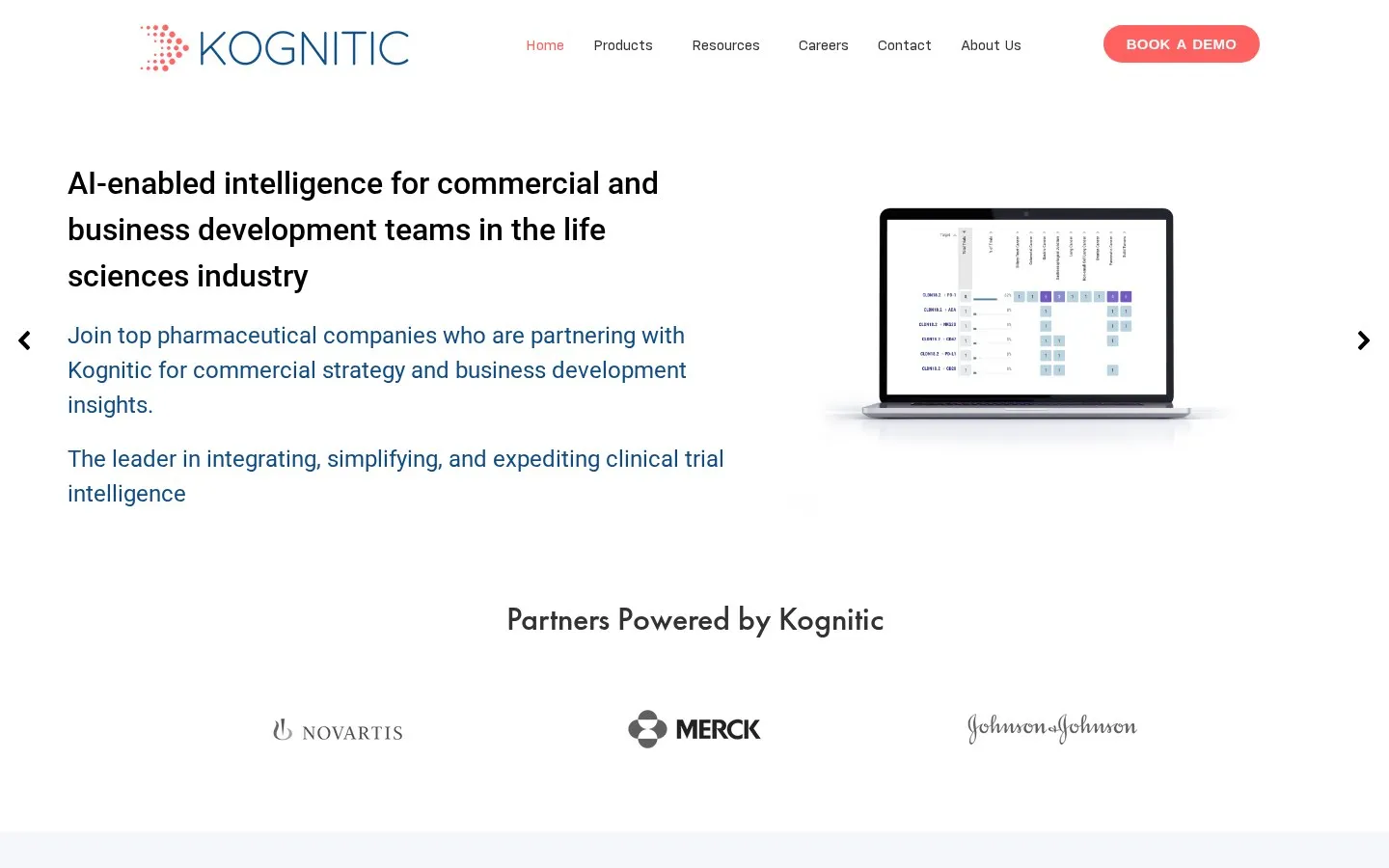
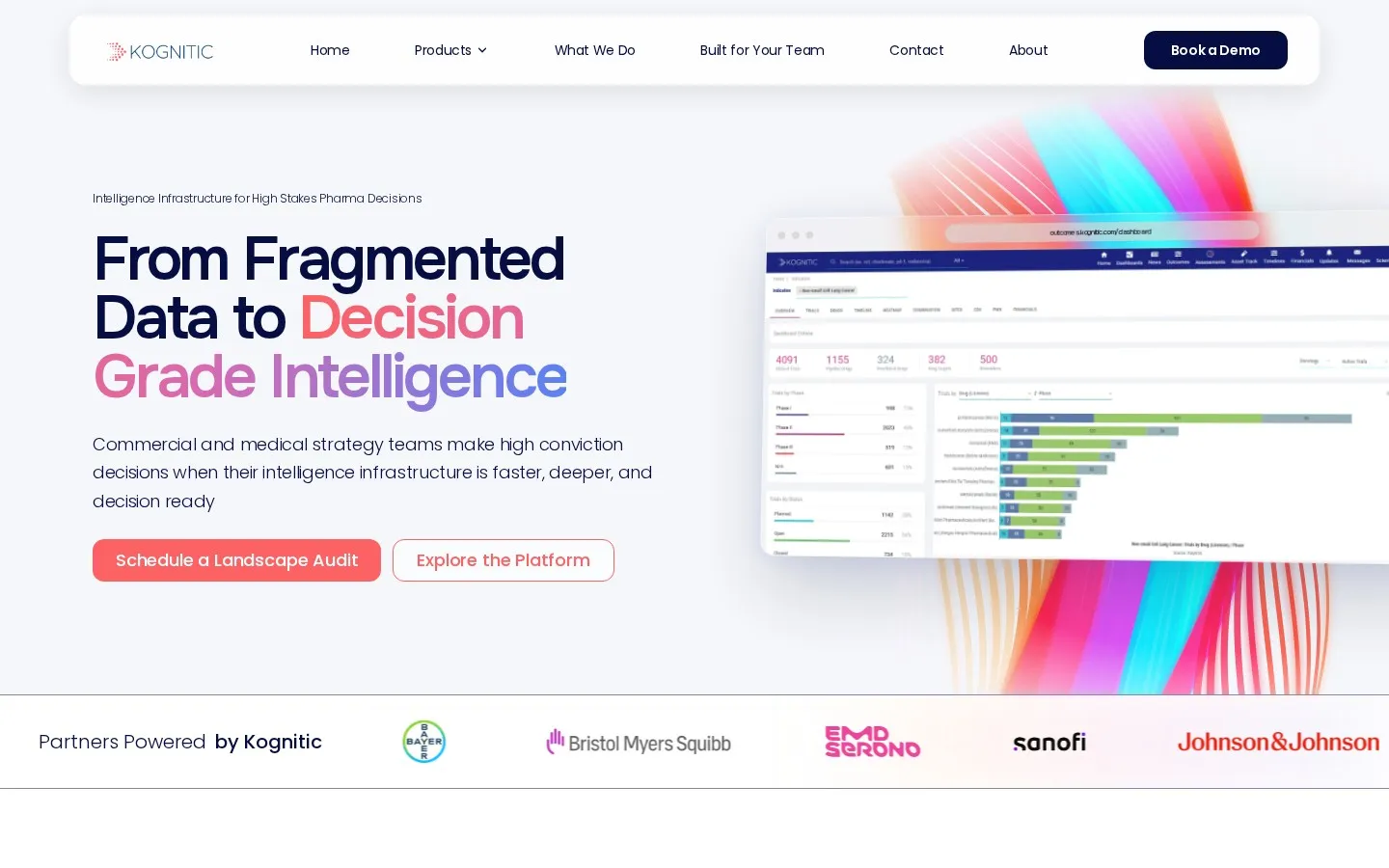
The homepage. Drag the handle to wipe between the old site and the new one.
The Before: A Site That Undersold Everything
The old Kognitic website was built on a legacy stack and hadn’t kept pace with the company’s growth. At a glance, the problems were structural, not cosmetic:
Positioning and messaging were unclear. The homepage led with feature lists and product names (Prime, PMx, Predict) rather than communicating business outcomes for the high-stakes decision-makers Kognitic serves. Visitors couldn’t immediately understand what Kognitic did or why it mattered to their workflow.
The design didn’t match the audience. Pharma executives and commercial strategy directors at top-20 companies evaluate vendors through the lens of trust and authority. The old site didn’t project either, with its white background, cluttered text blocks, generic icons, and mismatched typography. The product was trusted by Merck, Daiichi Sankyo, Bristol Myers Squibb, and Sanofi. The website didn’t reflect that reality.
Performance was a liability. Long load times, unoptimized assets, and a JavaScript-heavy legacy CMS created friction on every page. In enterprise sales cycles, first impressions are unforgiving.
Tracking was broken or missing. Marketing and sales had no reliable view of where traffic came from, which pages drove demo requests, or how visitors engaged across sessions. Decision-making was happening in the dark.
SEO equity was at risk. Years of domain authority and indexed content were tied to URL structures that would need to change. A full migration without a proper redirect strategy would mean losing organic visibility that had taken years to build.
The Brief: Build for the Audience Kognitic Already Had
The redesign brief wasn’t about making the site look prettier. It was about closing the gap between Kognitic’s product credibility and its digital presence, so that every pharma executive who landed on the site immediately understood they were looking at the intelligence infrastructure powering modern pharma decisions.
The directive was clear: design for enterprise trust, engineer for performance, and migrate without losing a single point of SEO equity.
The Solution: End-to-End Execution Across Four Disciplines
Axiolo took ownership of the full transformation, not as a vendor managing deliverables, but as an embedded team that understood the business stakes.
1. Visual Design & Brand Expression
The design language was rebuilt from the ground up. The new site adopts a dark, premium aesthetic that signals authority from the first pixel: deep backgrounds, controlled use of purple gradients, cinematic motion backgrounds, and a typographic system built for clarity at scale.
Every section was designed around a single question: Does this communicate decision-grade confidence to a pharma commercial strategy director?
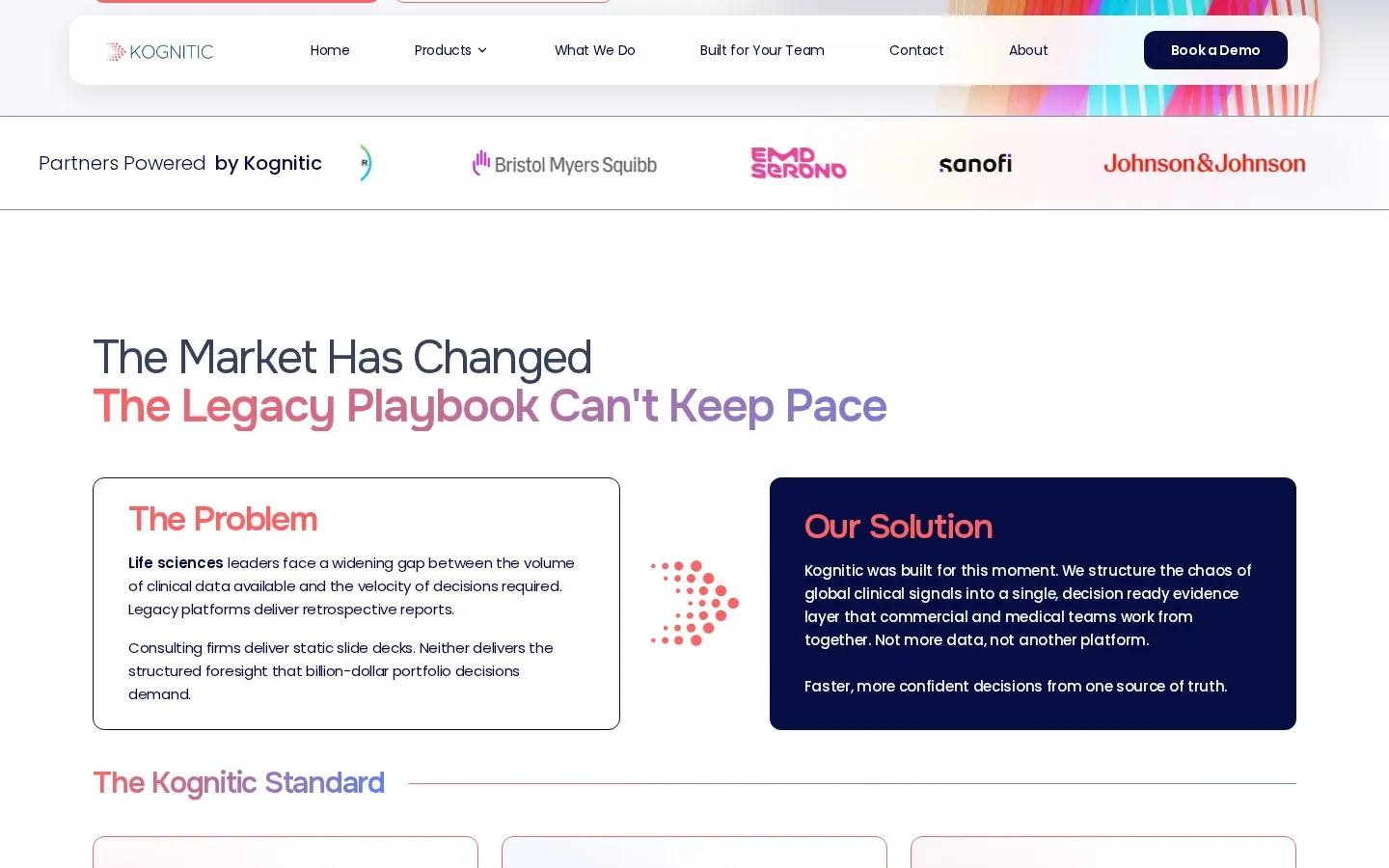
The homepage now opens with a clear positioning statement, “From Fragmented Data to Decision Grade Intelligence”, supported by an immediate product dashboard visual that shows, not tells, what Kognitic delivers. Social proof is front-and-center: the partner marquee with Merck, Bayer, Bristol Myers Squibb, EMD Serono, Sanofi, J&J, and others sets the tier of trust before a visitor reads a single line of product copy.
2. Full AstroJS Implementation
The new site is built on AstroJS, a modern static-first framework that delivers exceptional performance by shipping minimal JavaScript to the browser by default. This wasn’t a cosmetic choice. It was an engineering decision tied directly to page speed, Core Web Vitals, and SEO outcomes.
The architecture separates content from presentation cleanly, making it fast to update product pages, add new team members, or publish resources without touching the underlying framework. The site is deployed as a modern edge-optimized application, meaning pages load fast everywhere, on any device, with any connection.

↔
Social proof moved above the fold. Drag to compare.
3. Technical SEO & SEO Migration
Migrating a site that had years of indexed content required a meticulous redirect strategy. Every URL on the old site was audited, mapped to its equivalent on the new architecture, and accounted for in a comprehensive redirect file.
No page was abandoned. Every redirect was validated. The result: Kognitic’s domain authority and organic search equity transferred intact to the new site. No ranking drops, no broken links in search results, no lost traffic from years of published content and backlinks.
Beyond redirects, the new site was built with technical SEO foundations that the old site lacked: proper canonical tags, structured metadata on every page, semantic HTML throughout, an auto-generated XML sitemap, optimized Open Graph tags for social sharing, and a robots.txt configuration tuned to index the right content and protect the right paths.
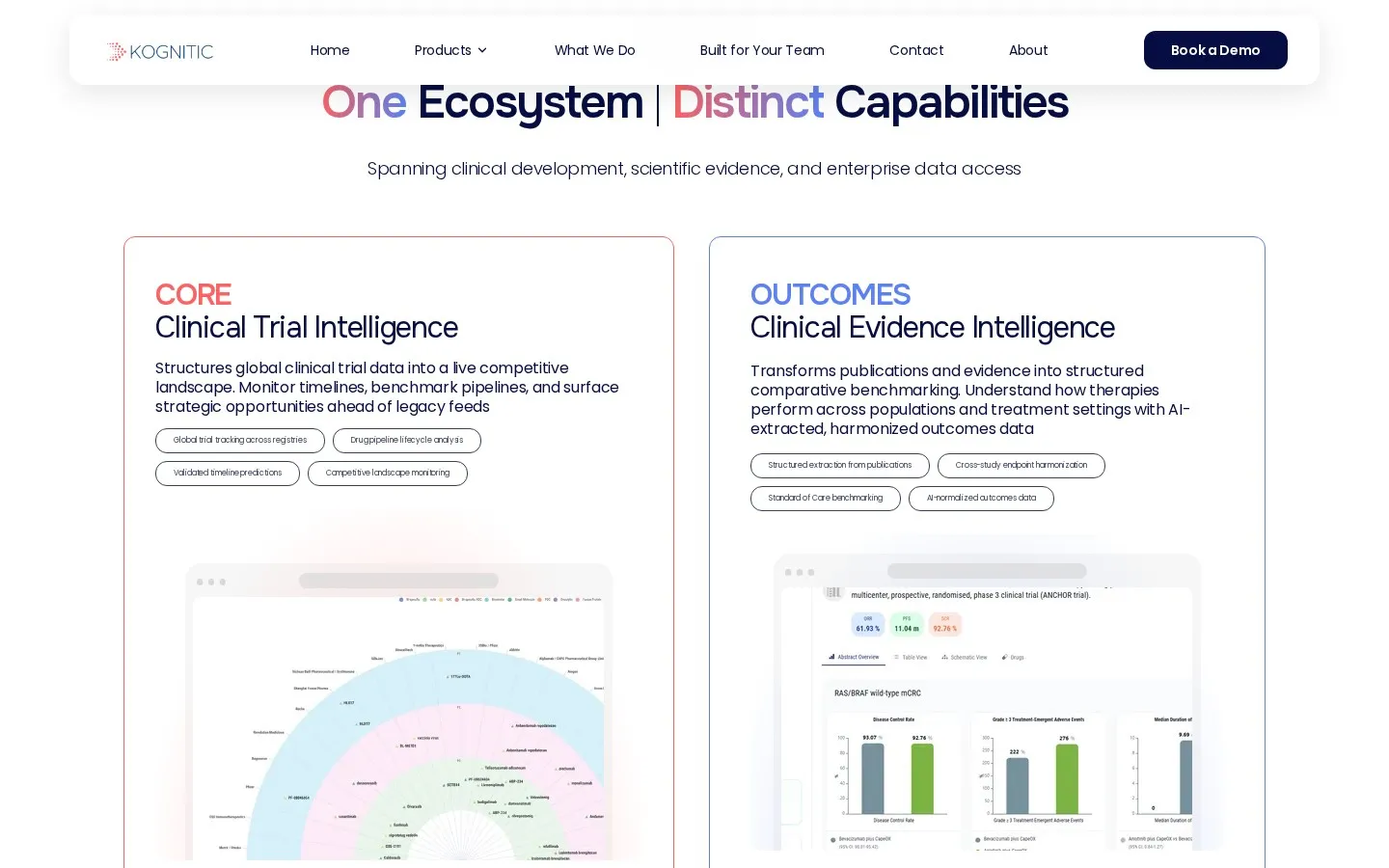
↔
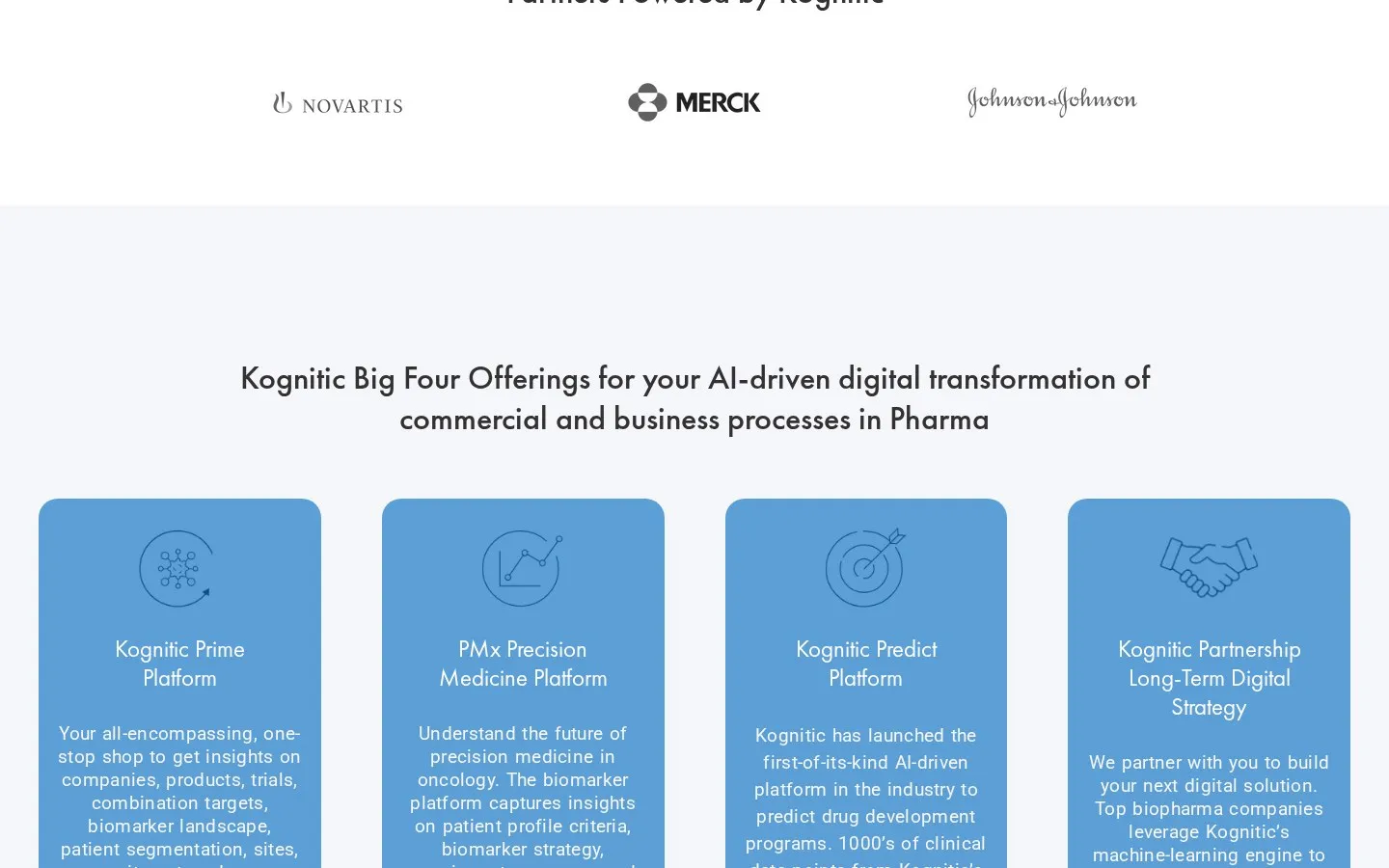
Product tiles became a platform architecture. Drag to compare.
4. Full Analytics & Tracking Stack
Kognitic’s commercial and growth teams needed visibility. Axiolo implemented a complete, production-grade tracking stack:
- Google Tag Manager (GTM): All tracking is routed through a single GTM container, giving the team the flexibility to add, modify, or remove tags without touching the codebase.
- Google Analytics 4: Full GA4 implementation with event tracking across demo requests, page engagement, scroll depth, and outbound clicks. Kognitic’s team now has a real attribution model, not just sessions, but the full path from first visit to booked demo.
- HubSpot Tracking: HubSpot’s tracking code was integrated via GTM, connecting website behavior to contact-level CRM records. When a prospect fills out a form or visits a product page, that signal flows directly into HubSpot, enabling sales and marketing to act on intent data in real time.
- Custom Event Tracking: Key conversion points (demo request CTAs, conference interest forms, product page engagement) are all instrumented with custom events that feed directly into marketing and sales reporting.
The Results: A Website That Finally Matches the Product
- Significantly faster page load times: the new AstroJS build loads in a fraction of the time of the legacy site
- Zero broken redirects: every old URL resolves correctly on the new architecture
- Full SEO equity preserved: no ranking drops from the migration
- Complete analytics visibility: marketing and sales now have end-to-end attribution from first visit to CRM record
- Enterprise-grade design: the site now visually matches the caliber of Kognitic's pharma client roster
- Structured for scale: product pages, team pages, and resources are easy to update without engineering support
What Made This Different
Most website projects fail at the handoff. Design teams deliver mockups. Developers build something close. SEO is an afterthought. Analytics are bolted on post-launch. The result is a site that looks better but performs inconsistently and leaves revenue on the table.
Axiolo’s embedded model means every discipline (design, engineering, SEO, and analytics) was owned by the same team, executing against the same brief. When the redirect strategy needed to account for URL structures the design hadn’t anticipated, we caught it. When the GTM implementation needed to fire events on dynamically rendered components, we solved it. When the SEO audit surfaced indexing issues in the old architecture, we fixed them before migration, not after.
That integration is what makes the difference between a site that looks good and a site that works.
For Kognitic, a company trusted to structure intelligence for billion-dollar pharmaceutical decisions, having a website that finally reflects that trust matters. It changes how prospects evaluate them before the first call, how conference attendees follow up after a demo, and how the commercial team’s outreach lands when a contact has already seen the new site.
The website is no longer the weakest link. It’s part of the case for why Kognitic belongs in the room.